
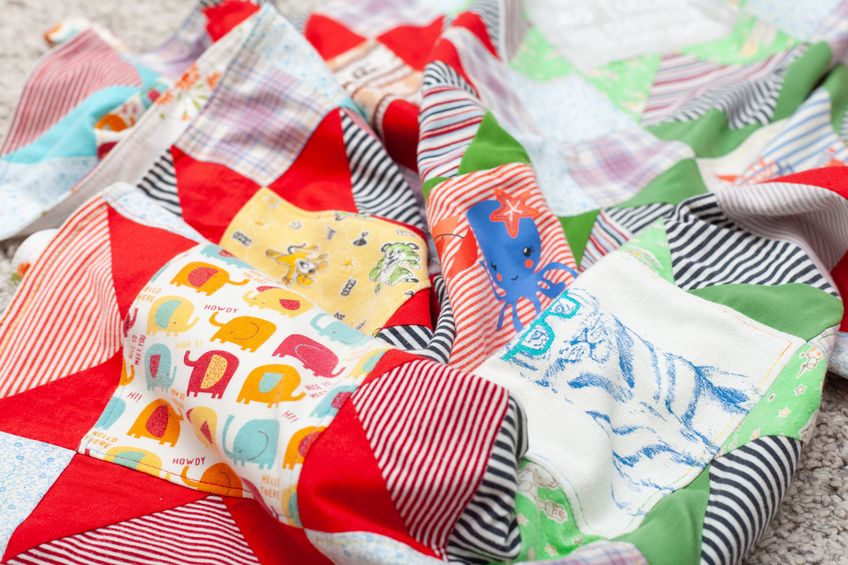
Mixing prints can be one of the most fun and creative parts of quilting, but it’s also where a lot of quilters hesitate. You might have fabrics you love individually, but once you start putting them together, it’s not always clear how they’ll work as a group. The goal isn’t to follow strict rules or limit your choices. It’s to understand how prints interact, so your quilt feels balanced instead of busy.
Start With a Clear Direction
It’s much easier to build a fabric pull when you’re not starting from scratch every time. Choosing one fabric as your starting point gives you a sense of direction right away. This could be a print with multiple colors, a fabric you’re excited to use, or something that sets the overall mood for your quilt.
Once you have that piece, the rest of your fabrics don’t have to match it exactly. They just need to relate to it. That connection can come from shared colors, similar tones, or even just a general feel. Starting this way keeps your choices focused and prevents the mix from feeling random.
Let Scale Do Some of the Work
One of the simplest ways to create balance is by mixing print sizes. Large prints tend to draw attention, while smaller prints read more like texture. When everything is the same scale, it’s harder for the eye to settle. When scale varies, the quilt naturally develops structure.
A larger print can act as a focal point. Medium-scale prints support it, and smaller prints or subtle textures help fill in the space without adding visual noise. You don’t need a perfect ratio, just enough variation that each fabric has a different role.
Use Color to Create Connection
Even very different prints can work together when they share color. Repeating a few key colors across your fabrics helps tie everything together, even if the patterns themselves aren’t similar.
This doesn’t mean every fabric needs to contain every color. Instead, look for overlap. If one fabric introduces a color, it helps if that color appears somewhere else in the group. When colors repeat, the mix feels intentional. When they don’t, a fabric can start to feel disconnected from the rest.
Give Your Prints Some Space
When working with multiple prints, it helps to include fabrics that aren’t competing for attention. Solids and blenders play an important role here. They give the eye a place to rest and allow your more detailed prints to stand out.
Without that contrast, a quilt can start to feel crowded, especially when several prints are bold or high-contrast. Adding quieter fabrics doesn’t take away from your design. It actually helps define it.
Step Back and Look at the Whole
After you’ve pulled your fabrics together, take a step back and look at them as a group. Seeing them from a distance makes it easier to spot anything that feels out of place. Sometimes one fabric stands out more than you intended. Other times, you may notice that everything feels a little too similar.
This is the point where small adjustments can make a big difference. Swapping out a single fabric or adding a calmer option can bring the whole group into balance.
Build Confidence Through Practice
Mixing prints gets easier the more you do it. Over time, you start to recognize what combinations you’re drawn to and what feels off. There’s no need to overanalyze every decision. If your fabric pull feels cohesive and you’re excited to work with it, that’s usually a good sign you’re on the right track.
And if you ever want help pulling fabrics or testing combinations, we’re always happy to help in the shop. Sometimes seeing fabrics laid out together or getting a second opinion is all it takes to feel confident moving forward.
Leave a Reply