
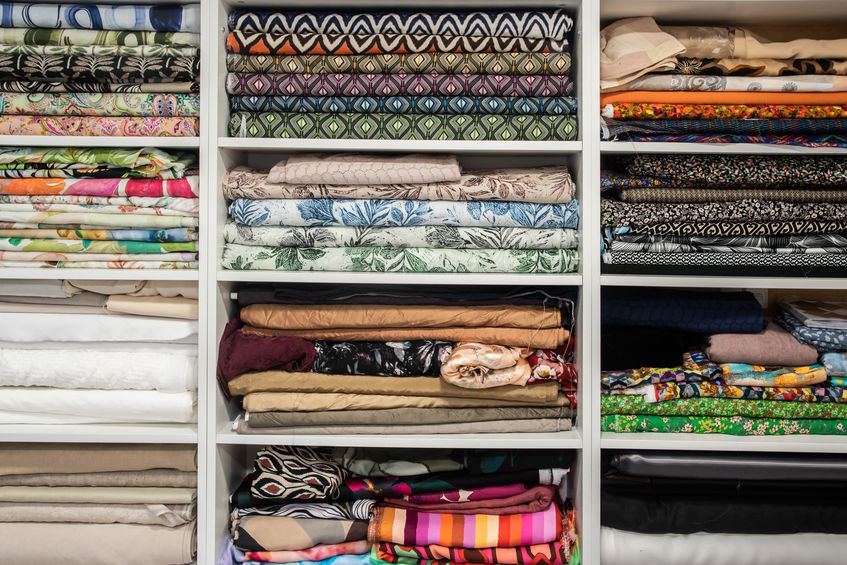
A fabric stash tends to grow over time, often one piece at a time. Some fabrics are bought with a specific project in mind, while others are collected because they simply felt right in the moment. However your collection comes together, storing fabric in a way that keeps it clean, color-safe, and easy to use makes quilting more enjoyable and less frustrating.
Good fabric storage isn’t about strict rules. It’s about creating conditions that keep your fabric looking and feeling the way you expect when you reach for it later.
Think About Where the Fabric Will Live
Most fabric spends far more time being stored than sewn. That makes location one of the biggest factors in how well it holds up over time. Closets, cabinets, shelving units, and drawers all work well as long as they’re part of a living space with relatively stable conditions.
Fabric tends to do best in areas where temperature and humidity don’t change dramatically. That’s why many quilters prefer keeping their stash in the same rooms where they sew or spend time. The goal is simply to avoid environments that feel damp, overly warm, or inconsistent.
Choose Storage That Fits Your Space and Habits
Choosing storage that fits your space matters more than choosing any particular type of container. Some quilters like being able to see everything at a glance, while others prefer fabric tucked neatly out of sight. Shelving, drawers, bins, and baskets can all work well, as long as the system makes it easy for you to find what you need.
Rather than focusing on the container itself, think about how often you want to access your fabric and how much effort you want storage to take. A system that’s easy to maintain will always serve you better than one that is aesthetic but inconvenient.
Fold With Longevity in Mind
How fabric is folded can also influence how it looks when you take it out again. Folding yardage neatly keeps things organized, but leaving fabric folded the exact same way for long stretches can create lines that need extra attention later.
Some quilters like to refold fabric periodically as part of general stash maintenance. Others use boards or mini bolts to keep folds consistent. Looser folds also work well, especially for fabrics you don’t reach for often. The goal isn’t to eliminate creases entirely, but to avoid creating deep ones that are difficult to press out.
Organize in a Way That Supports Creativity
Storage isn’t just about protection. It also affects how easily you can plan and start new projects. Grouping fabric by color, value, or type makes it easier to see what you already own and combine pieces confidently.
Some quilters prefer sorting by project or keeping current works in progress separate from the rest of the stash. Others organize by fabric type or scale. Any approach that helps you find what you need without digging through piles supports both storage and creativity.
Keep Fabric Fresh Between Projects
Fabric naturally absorbs its surroundings, which is why storing it in clean, neutral-smelling spaces makes a difference. This doesn’t require special products or constant attention. Simply being mindful of what shares the space with your fabric helps keep it pleasant to work with.
Prewashed and Unwashed Fabric Storage
Some quilters prewash everything, others prefer to wash only when a project begins, and many fall somewhere in between. Regardless of your approach, fabric benefits from being stored clean and fully dry. If fabric has been washed, allowing it to dry completely before folding helps maintain its texture. If it hasn’t been washed, storing it in a clean environment is usually all that’s needed.
There’s no right way here. What matters is consistency within your own process.
Build Storage Habits That Last
The best fabric storage systems are the ones that feel natural to use. Folding fabric before putting it away, returning unused cuts to their place, and keeping storage areas tidy all help maintain your stash without adding extra work.
When fabric is stored in a way that feels accessible and intentional, it’s more likely to be used. And fabric that gets used is fabric that brings value and enjoyment into your quilting practice.
Keep Fabric Ready for What Comes Next
Storing fabric well doesn’t require perfection or constant attention. It’s simply about creating a setup that supports how you quilt. With thoughtful placement, sensible folding, and a system that works for your space, your fabric stays clean, color-safe, and ready whenever inspiration strikes.
For more tips and advice on how to set yourself up for success with future quilting projects, stop by the 118 Fabrics & More shop. We’d love to chat with you!
Leave a Reply